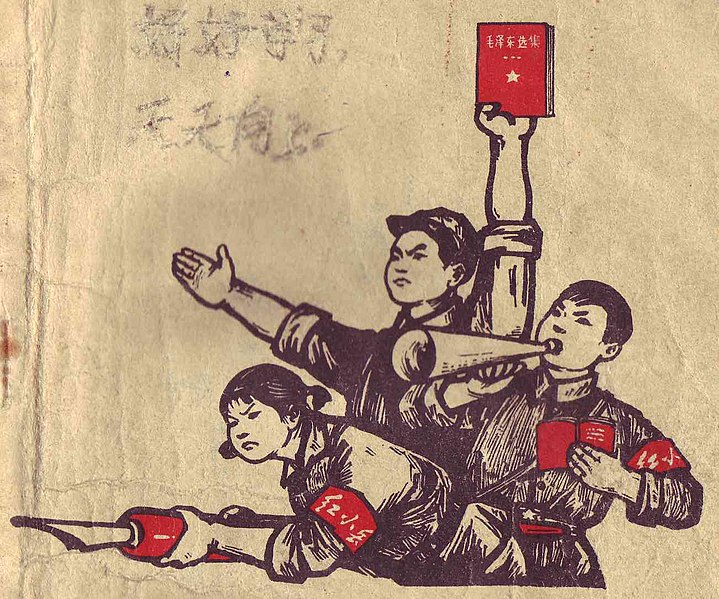
Showing posts with label Mao Zedong. Show all posts

Wednesday, November 9, 2011

The Shining Path: A Brief History, Part 4

Continued from Part 3
 
The Shining Path brutally killed its victims and rejected the idea of human rights. A Shining Path document stated:
 
2009 Shining Path anti-American
propaganda poster featuring the faces
of Marx, Lenin, Mao, and Guzman
“We start by not ascribing to either Universal Declaration of Human Rights or the Costa Rica [Convention on Human Rights], but we have used their legal devices to unmask and denounce the old Peruvian state. . . . For us, human rights are contradictory to the rights of the people, because we base rights in man as a social product, not man as an abstract with innate rights. "Human rights" do not exist except for the bourgeois man, a position that was at the forefront of feudalism, like liberty, equality, and fraternity were advanced for the bourgeoisie of the past. But today, since the appearance of the proletariat as an organized class in the Communist Party, with the experience of triumphant revolutions, with the construction of socialism, new democracy and the dictatorship of the proletariat, it has been proven that human rights serve the oppressor class and the exploiters who run the imperialist and landowner-bureaucratic states. Bourgeois states in general. . . . Our position is very clear. We reject and condemn human rights because they are bourgeois, reactionary, counterrevolutionary rights, and are today a weapon of revisionists and imperialists, principally Yankee imperialists.”
--The Communist Party of Peru, Sobre las Dos Colinas
 
Level of support
While the Shining Path quickly seized control of large areas of Peru, it soon faced serious problems. The Shining Path's Maoism never had the support of the majority of the Peruvian people; according to opinion polls, 15% of the population considered subversion to be justifiable in June 1988 while 17% considered it justifiable in 1991. In June 1991, "the total sample disapproved of the Shining Path by an 83 to 7 percent margin, with 10 percent not answering the question. Among the poorest, however, only 58% stated disapproval of the Shining Path; 11 percent said they had a favorable opinion of the Shining Path, and some 31 percent would not answer the question." A September 1991 poll found that 21 percent of those polled in Lima believed that the Shining Path did not kill and torture innocent people. The same poll found that 13% believed that society would be more just if the Shining Path won the war and 22% believed society would be equally just under the Shining Path as it was under the government.
 
Many peasants were unhappy with the Shining Path's rule for a variety of reasons, such as its disrespect for indigenous culture and institutions, and the brutality of its "popular trials" that sometimes included "slitting throats, strangulation, stoning, and burning." While punishing and killing cattle thieves was popular in some parts of Peru, the Shining Path also killed peasants and popular leaders for minor offenses. Peasants were offended by the rebels' injunction against burying the bodies of Shining Path victims.
 
The Shining Path became disliked for its policy of closing small and rural markets in order to end small-scale capitalism and to starve Lima. As a Maoist organization, it strongly opposed all forms of capitalism. It followed Mao's dictum that guerrilla warfare should start in the countryside and gradually choke off the cities. As the peasants' livelihoods depended on trade in the markets, they rejected such closures. In several areas of Peru, the Shining Path launched unpopular restrictive campaigns, such as a prohibition on parties and the consumption of alcohol.
 
Government response and abuses
In 1991, President Alberto Fujimori issued a law that gave the rondas a legal status, and from that time they were officially called Comités de auto defensa ("Committees of Self Defence"). They were officially armed, usually with 12-gauge shotguns, and trained by the Peruvian Army. According to the government, there were approximately 7,226 comités de auto defensa as of 2005; almost 4,000 are located in the central region of Peru, the stronghold of the Shining Path.
 
The Peruvian government also clamped down on the Shining Path in other ways. Military personnel were dispatched to areas dominated by the Shining Path, especially Ayacucho, to fight the rebels. Ayacucho itself was declared an emergency zone, and constitutional rights were suspended in the area.
 
Civilian victims of the Shining Path
Initial government efforts to fight the Shining Path were not very effective or promising. Military units engaged in many human rights violations, which caused the Shining Path to appear in the eyes of many as the lesser of two evils. They used excessive force and killed many innocent civilians. Government forces destroyed villages and killed campesinos suspected of supporting the Shining Path. They eventually lessened the pace at which the armed forces committed atrocities such as massacres. Additionally, the state began the widespread use of intelligence agencies in its fight against the Shining Path. However, atrocities were committed by the National Intelligence Service and the Army Intelligence Service, notably the La Cantuta massacre and the Barrios Altos massacre, both of which were committed by Grupo Colina.
 
After the collapse of the Fujimori government, interim President Valentín Paniagua, established a Truth and Reconciliation Commission to investigate the conflict. The Commission found in its 2003 Final Report that 69,280 people died or disappeared between 1980 and 2000 as a result of the armed conflict. About 54% of the deaths and disappearances reported to the Commission were caused by the Shining Path. A statistical analysis of the available data led the Truth and Reconciliation Commission to estimate that the Shining Path was responsible for the death or disappearance of 31,331 people, 46% of the total deaths and disappearances. According to a summary of the report by Human Rights Watch, "Shining Path… killed about half the victims, and roughly one-third died at the hands of government security forces… The commission attributed some of the other slayings to a smaller guerrilla group and local militias. The rest remain unattributed." The MRTA was held responsible for 1.5% of the deaths.
 
Continued in Part 5: The Shining Path’s collapse and resurgence
Information courtesy of Wikipedia. Propaganda poster was obtained via TrevorLoudon.com and victims photograph was obtained via Neveryetmelted.com .

Monday, November 7, 2011

The Shining Path: A Brief History, Part 3

Continued from Part 2

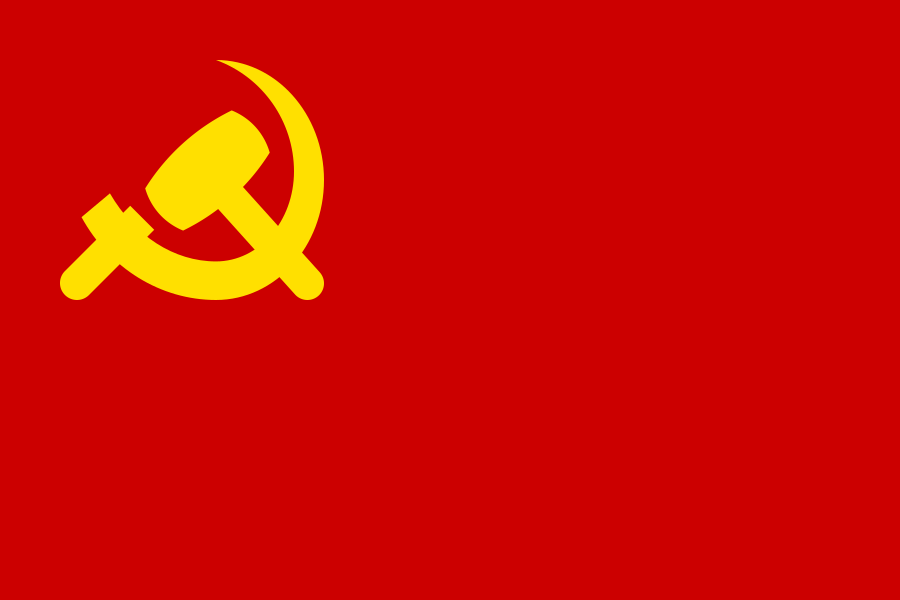
Flag of the Communist Party of Peru
(The Shining Path)
In response [to the execution of Curitomay by peasant militias in a defensive campaign], in April the Shining Path entered the province of Huanca Sancos and the towns of Yanaccollpa, Ataccara, Llacchua, Muylacruz and Lucanamarca, where they killed 69 people, in what became known as the Lucanamarca massacre. This was the first time the Shining Path massacred peasants. Similar events followed, such as the ones in Hauyllo, Tambo District. The guerrillas killed 47 peasants, including 14 children aged four to fifteen. Additional massacres by the Shining Path occurred, such as the one in Marcas on August 29, 1985. In addition to occasional massacres, the Shining Path established labor camps to punish those who betrayed the "forces of the people." Those imprisoned were forced to work the lands and the coca fields. Hunger and deprivation were commonplace, and attempting escape was punishable by immediate execution.
 
The Shining Path's attacks were not limited to the countryside. It mounted attacks against the infrastructure in Lima, killing civilians in the process. In 1983, it sabotaged several electrical transmission towers, causing a citywide blackout, and set fire and destroyed the Bayer industrial plant. That same year, it set off a powerful bomb in the offices of the governing party, Popular Action. Escalating its activities in Lima, in June 1985 it blew up electricity transmission towers in Lima, producing a blackout, and detonated car bombs near the government palace and the justice palace. It was believed to be responsible for bombing a shopping mall. At the time, President Fernando Belaúnde Terry was receiving the Argentine president Raúl Alfonsín. In one of its last attacks in Lima, on July 16, 1992, the group detonated a powerful bomb on Tarata Street in the Miraflores District, full of civilian people, adults and children, killing 25 people and injuring an additional 155.
 
During this period, the Shining Path assassinated specific individuals, notably leaders of other leftist groups, local political parties, labor unions, and peasant organizations, some of whom were anti-Shining Path Marxists. On April 24, 1985, in the midst of presidential elections, it tried to assassinate Domingo García Rada, the president of the Peruvian National Electoral Council, severely injuring him and mortally wounding his driver. In 1988, Constantin Gregory, an American citizen working for the United States Agency for International Development, was assassinated. Two French aid workers were killed on December 4 that same year. In August 1991, the group killed one Italian and two Polish priests in Ancash Region. The following February, it assassinated María Elena Moyano, a well-known community organizer in Villa El Salvador, a vast shantytown in Lima.
Flag of the MRTA, another Peruvian
Marxist guerrilla army and enemy of
the Shining Path
By 1991, the Shining Path had control of much of the countryside of the center and south of Peru and had a large presence in the outskirts of Lima. As the organization grew in power, a cult of personality grew around Guzmán. The official ideology of the Shining Path ceased to be 'Marxism–Leninism-Mao Tse-tung thought', and was instead referred to as 'Marxism–Leninism–Maoism-Gonzalo thought'. The Shining Path fought against Peru's other major Marxist guerrilla group, the Túpac Amaru Revolutionary Movement (MRTA) and campesino (peasant) self-defense groups organized by the Peruvian armed forces.
 
Although the reliability of reports regarding the Shining Paths alleged atrocities remain a matter of controversy, the organization's use of violence is well documented. Lisa North, an expert on Peru at York University, noted that "the assassinations they carried out were absolutely ruthless . . . It was so extremist – absolutely, totally doctrinaire and absolutely, totally ruthless in pursuit of its aims."
 
The Shining Path brutally killed its victims and rejected the idea of human rights.
 
Continued in Part 4: The flat denial of human rights and loss of popularity
Both images property of "Huhsunqu" and used via Creative Commons Attribution-Share Alike 2.5 Generic license.

Friday, September 16, 2011

The People’s Republic of China: A Brief History, part 3

Deng Xiaoping with Margaret Thatcher
Continued from Part 2

The Post-Mao Era
Mao's death in September 1976 removed a towering figure from Chinese politics and set off a scramble for succession. Former Minister of Public Security Hua Guofeng was quickly confirmed as Party Chairman and Premier. A month after Mao's death, Hua, backed by the PLA, arrested Jiang Qing and other members of the "Gang of Four." After extensive deliberations, the Chinese Communist Party leadership reinstated Deng Xiaoping to all of his previous posts at the 11th Party Congress in August 1977. Deng then led the effort to place government control in the hands of veteran party officials opposed to the radical excesses of the previous 2 decades.

The new, pragmatic leadership emphasized economic development and renounced mass political movements. At the pivotal December 1978 Third Plenum (of the 11th Party Congress Central Committee), the leadership adopted economic reform policies aimed at expanding rural income and incentives, encouraging experiments in enterprise autonomy, reducing central planning, and attracting foreign direct investment to China. The plenum also decided to accelerate the pace of legal reform, culminating in the passage of several new legal codes by the National People's Congress in June 1979.

After 1979, the Chinese leadership moved toward more pragmatic positions in almost all fields. The party encouraged artists, writers, and journalists to adopt more critical approaches, although open attacks on party authority were not permitted. In late 1980, Mao's Cultural Revolution was officially proclaimed a catastrophe. Hua Guofeng, a protege of Mao, was replaced as premier in 1980 by reformist Sichuan party chief Zhao Ziyang and as party General Secretary in 1981 by the even more reformist Communist Youth League chairman Hu Yaobang.

Reform policies brought great improvements in the standard of living, especially for urban workers and for farmers who took advantage of opportunities to diversify crops and establish village industries. Controls on literature and the arts were relaxed, and Chinese intellectuals established extensive links with scholars in other countries.

At the same time, however, political dissent as well as social problems such as inflation, urban migration, and prostitution emerged. Although students and intellectuals urged greater reforms, some party elders increasingly questioned the pace and the ultimate goals of the reform program. In December 1986, student demonstrators, taking advantage of the loosening political atmosphere, staged protests against the slow pace of reform, confirming party elders' fear that the current reform program was leading to social instability. Hu Yaobang, a protege of Deng and a leading advocate of reform, was blamed for the protests and forced to resign as CCP General Secretary in January 1987. Premier Zhao Ziyang was made General Secretary and Li Peng, former Vice Premier and Minister of Electric Power and Water Conservancy, was made Premier.

1989 Student Movement and Tiananmen Square
After Zhao became the party General Secretary, the economic and political reforms he had championed, especially far-reaching political reforms enacted at the 13th Party Congress in the fall of 1987 and subsequent price reforms, came under increasing attack. His proposal in May 1988 to accelerate price reform led to widespread popular complaints about rampant inflation and gave opponents of rapid reform the opening to call for greater centralization of economic controls and stricter prohibitions against Western influence. This precipitated a political debate, which grew more heated through the winter of 1988-89.

The death of Hu Yaobang on April 15, 1989, coupled with growing economic hardship caused by high inflation, provided the backdrop for a large-scale protest movement by students, intellectuals, and other parts of a disaffected urban population. University students and other citizens camped out in Beijing's Tiananmen Square to mourn Hu's death and to protest against those who would slow reform. Their protests, which grew despite government efforts to contain them, called for an end to official corruption, a greater degree of democracy, and for defense of freedoms guaranteed by the Chinese constitution. Protests also spread to many other cities, including Shanghai, Chengdu, and Guangzhou.

Candlelight vigil commemorating the
martyrs of Tiananmen Square, 2009.
Martial law was declared on May 20, 1989. Late on June 3 and early on the morning of June 4, military units were brought into Beijing. They used armed force to clear demonstrators from the streets. There are no official estimates of deaths in Beijing, but most observers believe that casualties numbered in the hundreds.

After June 4, while foreign governments expressed horror at the brutal suppression of the demonstrators, the central government eliminated remaining sources of organized opposition, detained large numbers of protesters, and required political reeducation not only for students but also for large numbers of party cadre and government officials. Zhao was purged at the Fourth Plenum of the 13th Central Committee in June and replaced as Party General Secretary by Jiang Zemin. Deng’s power was curtailed as more orthodox party leaders, led by Chen Yun, became the dominant group in the leadership.

Following this resurgence of conservatives in the aftermath of June 4, economic reform slowed until given new impetus by Deng Xiaoping's return to political dominance 2 years later, including a dramatic visit to southern China in early 1992. Deng's renewed push for a market-oriented economy received official sanction at the 14th Party Congress later in the year as a number of younger, reform-minded leaders began their rise to top positions. Hu Jintao was elevated to the Politburo Standing Committee at the Congress. Deng and his supporters argued that managing the economy in a way that increased living standards should be China's primary policy objective, even if "capitalist" measures were adopted. Subsequent to the visit, the Communist Party Politburo publicly issued an endorsement of Deng's policies of economic openness. Though continuing to espouse political reform, China has consistently placed overwhelming priority on the opening of its economy.

Continued in Part 4: The Post-Deng Era
Deng-Thatcher image is in the public domain. Tiananmen Square Candlelight Vigil image is the property of Ryanne Lai (via Flickr) and is used via Creative Commons Attribution 2.0 Generic License.  Both images were obtained from Wikimedia Commons.

Tuesday, September 13, 2011

The People’s Republic of China: A Brief History, part 2

Continued from Part 1

The People's Republic of China
In Beijing, on October 1, 1949, Mao Zedong proclaimed the founding of the People's Republic of China (P.R.C.). The new government assumed control of a people exhausted by two generations of war and social conflict, and an economy ravaged by high inflation and disrupted transportation links. A new political and economic order modeled on the Soviet example was quickly installed.

In the early 1950s, China undertook a massive economic and social reconstruction program. The new leaders gained popular support by curbing inflation, restoring the economy, and rebuilding many war-damaged industrial plants. The CCP's authority reached into almost every aspect of Chinese life. Party control was assured by large, politically loyal security and military forces; a government apparatus responsive to party direction; and the placement of party members in leadership positions in labor, women's, and other mass organizations.  Meanwhile, the People's Liberation Army took advantage of Soviet shortcomings in foreign policy and supplied many weapons and personnel to the Viet Minh insurgency in French Indochina and deployed parts of the PLA (renamed the "People's Volunteer Army") to fight on behalf of North Korea in the Korean War. 

The "Great Leap Forward" and the Sino-Soviet Split
In 1958, Mao broke with the Soviet model and announced a new economic program, the "Great Leap Forward," aimed at rapidly raising industrial and agricultural production. Giant cooperatives (communes) were formed, and "backyard factories" dotted the Chinese landscape. The results were disastrous. Normal market mechanisms were disrupted, agricultural production fell behind, and China's people exhausted themselves producing what turned out to be shoddy, un-salable goods. Within a year, starvation appeared even in fertile agricultural areas. From 1960 to 1961, the combination of poor planning during the Great Leap Forward and bad weather resulted in one of the deadliest famines in human history.

The already-strained Sino-Soviet relationship deteriorated sharply in 1959, when the Soviets started to restrict the flow of scientific and technological information to China. The dispute escalated, and the Soviets withdrew all of their personnel from China in August 1960. In 1960, the Soviets and the Chinese began to have disputes openly in international forums.

The Cultural Revolution
In the early 1960s, State President Liu Shaoqi and his protege, Party General Secretary Deng Xiaoping, took over direction of the party and adopted pragmatic economic policies at odds with Mao's revolutionary vision. Dissatisfied with China's new direction and his own reduced authority, Party Chairman Mao launched a massive political attack on Liu, Deng, and other pragmatists in the spring of 1966. The new movement, the "Great Proletarian Cultural Revolution," was unprecedented in communist China’s history. For the first time, a section of the Chinese communist leadership sought to rally popular opposition against another leadership group. China was set on a course of political and social anarchy that lasted the better part of a decade.

In the early stages of the Cultural Revolution, Mao and his "closest comrade in arms," National Defense Minister Lin Biao, charged Liu, Deng, and other top party leaders with dragging China back toward capitalism. Radical youth organizations, called Red Guards, attacked party and state organizations at all levels, seeking out leaders who would not bend to the radical wind. In reaction to this turmoil, some local People's Liberation Army (PLA) commanders and other officials maneuvered to outwardly back Mao and the radicals while actually taking steps to rein in local radical activity.

Gradually, Red Guard and other radical activity subsided, and the Chinese political situation stabilized along complex factional lines. The leadership conflict came to a head in September 1971, when Party Vice Chairman and Defense Minister Lin Biao reportedly tried to stage a coup against Mao; Lin Biao allegedly later died in a plane crash in Mongolia.

In the aftermath of the Lin Biao incident, many officials criticized and dismissed during 1966-69 were reinstated. Chief among these was Deng Xiaoping, who reemerged in 1973 and was confirmed in 1975 in the concurrent posts of Party Vice Chairman, Politburo Standing Committee member, PLA Chief of Staff, and Vice Premier.

The ideological struggle between more pragmatic, veteran party officials and the radicals re-emerged with a vengeance in late 1975. Mao's wife, Jiang Qing, and three close Cultural Revolution associates (later dubbed the "Gang of Four") launched a media campaign against Deng. In January 1976, Premier Zhou Enlai, a popular political figure, died of cancer. On April 5, Beijing citizens staged a spontaneous demonstration in Tiananmen Square in Zhou's memory, with strong political overtones of support for Deng. The authorities forcibly suppressed the demonstration. Deng was blamed for the disorder and stripped of all official positions, although he retained his party membership.

See the book Son of the Revolution by Liang Heng for a firsthand account of growing up through the litreral terror of the Cultural Revolution.

Continued in Part 3: The Post-Mao Era and Tiananmen Square.
Image used is in the public domain and was obtained from Wikimedia Commons.

The People’s Republic of China: A Brief History, part 1

The last dynasty in the Middle Kingdom was established in 1644, when the Manchus overthrew the native Ming dynasty and established the Qing (Ch'ing) dynasty with Beijing as its capital. At great expense in blood and treasure, the Manchus over the next half-century gained control of many border areas, including Xinjiang, Yunnan, Tibet, Mongolia, and Taiwan. The success of the early Qing period was based on the combination of Manchu martial prowess and traditional Chinese bureaucratic skills.

During the 19th century, Qing control weakened, and prosperity diminished. China suffered massive social strife, economic stagnation, explosive population growth, and Western penetration and influence. The Taiping and Nian rebellions, along with a Russian-supported Muslim separatist movement in Xinjiang, drained Chinese resources and almost toppled the dynasty. Britain's desire to continue its opium trade with China collided with imperial edicts prohibiting the addictive drug, and the First Opium War erupted in 1840. China lost the war; subsequently, Britain and other Western powers, including the United States, forcibly occupied "concessions" and gained special commercial privileges. Hong Kong was ceded to Britain in 1842 under the Treaty of Nanking, and in 1898, when the Opium Wars finally ended, Britain executed a 99-year lease of the New Territories, significantly expanding the size of the Hong Kong colony.

As time went on, the Western powers, wielding superior military technology, gained more economic and political privileges. Reformist Chinese officials argued for the adoption of Western technology to strengthen the dynasty and counter Western advances, but the Qing court played down both the Western threat and the benefits of Western technology.

Early 20th Century China
Frustrated by the Qing court's resistance to reform, young officials, military officers, and students--inspired by the revolutionary ideas of Sun Yat-sen--began to advocate the overthrow of the Qing dynasty and creation of a republic. A revolutionary military uprising on October 10, 1911, led to the abdication of the last Qing monarch. As part of a compromise to overthrow the dynasty without a civil war, the revolutionaries and reformers allowed high Qing officials to retain prominent positions in the new republic. One of these figures, Gen. Yuan Shikai, was chosen as the republic's first president. Before his death in 1916, Yuan unsuccessfully attempted to name himself emperor. His death left the republican government all but shattered, ushering in the era of the "warlords" during which China was ruled and ravaged by shifting coalitions of competing provincial military leaders.

In the 1920s, Sun Yat-sen established a revolutionary base in south China and set out to unite the fragmented nation. With Soviet assistance, he organized the Kuomintang (KMT or "Chinese Nationalist People's Party"), and entered into an alliance with the fledgling Chinese Communist Party (CCP). After Sun's death in 1925, one of his proteges, Chiang Kai-shek, seized control of the KMT and succeeded in bringing most of south and central China under its rule. In 1927, Chiang turned on the CCP and executed many of its leaders. The remnants fled into the mountains of eastern China. In 1934, driven out of their mountain bases, the CCP's forces embarked on a "Long March" across some of China's most desolate terrain to the northwestern province of Shaanxi, where they established a guerrilla base at Yan'an.

During the "Long March," the communists reorganized under a new leader, Mao Zedong (Mao Tse-tung). The bitter struggle between the KMT and the CCP continued openly or clandestinely through the 14-year-long Japanese invasion (1931-45), even though the two parties nominally formed a united front to oppose the Japanese invaders in 1937. The war between the two parties resumed after the Japanese defeat in 1945. By 1949, the CCP occupied most of the country.

Chiang Kai-shek fled with the remnants of his KMT government and military forces to Taiwan, where he proclaimed Taipei to be China's "provisional capital" and vowed to re-conquer the Chinese mainland. Taiwan still calls itself the "Republic of China."

In Beijing, on October 1, 1949, Mao Zedong proclaimed the founding of the People's Republic of China (P.R.C.). The new government assumed control of a people exhausted by two generations of war and social conflict, and an economy ravaged by high inflation and disrupted transportation links. A new political and economic order modeled on the Soviet example was quickly installed.

Continued in Part 2: The People’s Republic of China
*Spoiler Alert*  There would be another generation of war and social conflict, and an economy ravaged by high inflation and famine resulting directly from the failed policies of the Chinese Communist Party and the “Soviet model” of government.

Mao image by "Steelsnari" and used via Creative Commons Attribution-Share Alike 3.0 Unported license.  Second and third images are public domain. All three images obtained from Wikimedia Commons.

Tuesday, August 30, 2011

The Communist Party of Nepal (Maoist): Exclusion from Foreign Terrorist Organization List?

Office of the Spokesperson (State Department)
Question Taken at the August 29, 2011 Daily Press Briefing

QUESTION: With the inclusion of Maoists in the newly-formed government in Nepal, is the U.S. considering lifting the FTO designation from these Maoist groups?

ANSWER: The Communist Party of Nepal (Maoist) is not included on the Foreign Terrorist Organization list, but remains a designated Specially Designated Global Terrorist under Executive Order 13224 and is included on the Terrorism Exclusion List, pursuant to the Immigration and Nationality Act. While the Party has taken some positive steps, we continue to have areas of concern which must be addressed before the Party could be de-listed.

Note: The Communist Party of Nepal-Maoist split from the Communist Party of Nepal-Unity Center in 1995.  In 1996 they initiated a “People’s War” based on Mao’s principle that “Political power grows out of the barrel of a gun.”

Since they declaration of war they have attacked numerous police stations and carried out bombings.  They maintain close ties with the Maoist insurgency in India.